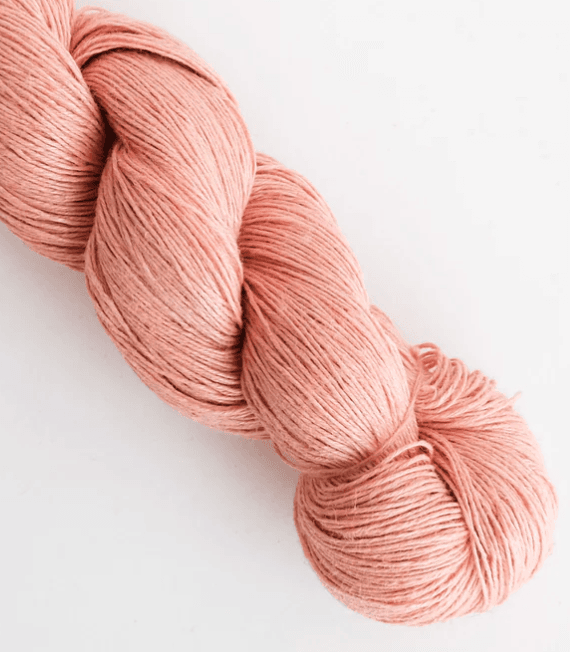
Madder root has been grown in dye gardens for centuries. At its most exhausted — the final pull from the bath — it gives blush: soft, warm, barely-there pink that deepens slightly at the edges of each skein.
On Belgian linen, natural dye behaves differently than on wool. The color is quieter, more atmospheric, and it deepens with wash and wear rather than fading.
The Purple Finch is a bird of the Northern forest — misnamed, more raspberry than purple, returning to the New River Gorge corridor at the start of summer. This is its color: soft, warm, not quite red. Small batch, Beltane 2026.
A crisp linen that softens with every wash: a lightweight summer top or shawl in knitting, or crocheted market bags and table linens.
Fiber base: 100% Belgian linen, non-superwash
Yarn weight: Fingering weight, 412 yds / 377 m per 100 g
Suggested needles: 2.25–3.25 mm (US 1–3 / UK 13–10)
Suggested crochet hook: 2.25–3.5 mm (US B-1 to E-4)
Gauge: 30 sts / 4″ on 3.25 mm (US 3)
Weaving EPI: approx. 15
Fiber source: Canada
Care
Hand wash cold, lay flat to dry. All of our colorways are tonal – with shifts in color from light to dark as part of the natural dyeing process. Colors and tones may vary from the images online. Pre-wash in cold water – by hand – before use, as natural dyes may release excess color during the first several washes.