What’s in the kit:
- 3 × 25g mini-skeins of sample yarn. 75 grams total.
- Dried marigold flowers in a muslin bag — grown in Blue Thistle’s Huntington dye garden
- Pre-weighed alum mordant
- Step-by-step instruction sheet with timing, temperature guidance, and troubleshooting tips
What you’ll need at home: A large non-reactive pot (stainless steel or enamel — not aluminum or cast iron), a heat source, a kitchen strainer or fine mesh colander, measuring spoons, water, and rubber gloves if you’d like to keep your hands clean.
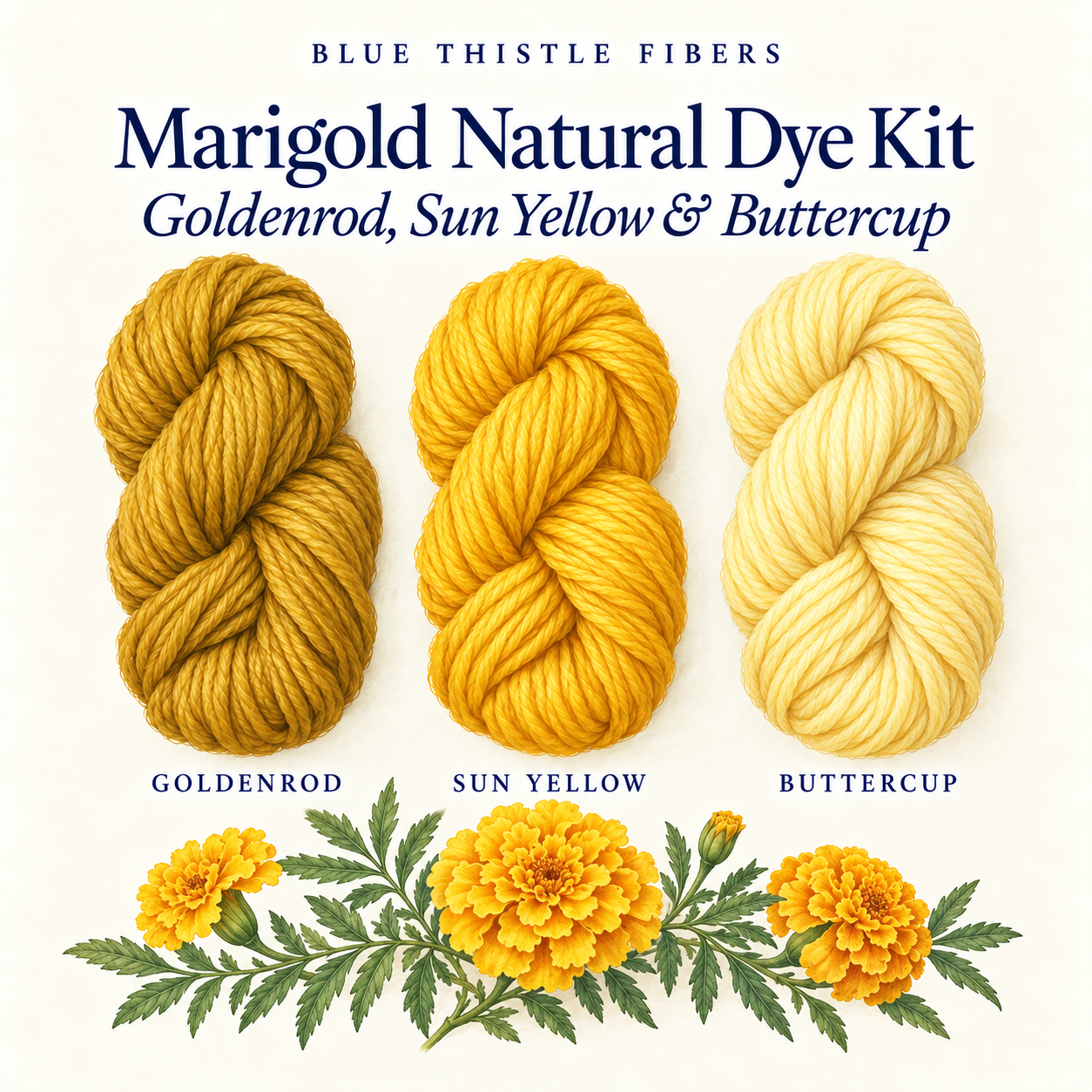
What to expect: Marigold on alum-mordanted wool gives warm, clear yellows that lean gold or amber depending on how concentrated your dye bath is. It’s one of the most consistent natural dyes there is — great news when you’re learning. The color is also a wonderful base if you ever want to overdye with indigo for green in a future experiment.
About the flowers: These are Calendula officinalis and Tagetes varieties, grown and harvested at our Huntington dye garden and dried for use in the dye pot. Using whole flowers means you’ll strain them out before adding your yarn — there’s a simple step in the instructions for this. The muslin bag they arrive in can go right into the pot as a dye sachet to make things even easier.
Fiber note: ifingering weight base — the recycled nylon content makes it durable and gives it a gentle sheen. It’s a great first canvas for natural dye because it mordants evenly and holds color well. The finished skein is ready to knit into socks, shawls, or any fingering-weight project.
Care for naturally dyed yarn: Hand wash in cool water with a gentle wool wash. Marigold is a well-regarded dye for its lightfastness — your color will hold well with proper care.
Seasonal availability: This kit is available while our harvest lasts. We grow and dry marigolds each summer at the Huntington farm; when they’re gone, they’re gone until next season. Sign up for our email list to be notified when new harvest kits are available.
Natural Dye Kit FAQ
Do I need any dyeing experience?
No. These kits introduce natural dyeing through a small wool-yarn project. Each includes step-by-step instructions with timing, temperature guidance and troubleshooting tips.
What’s included?
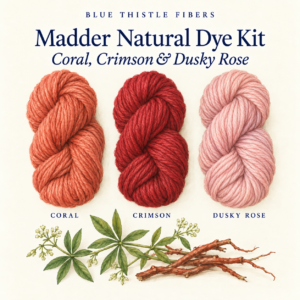
Both kits include three 25g mini-skeins of undyed yarn (75g total), pre-weighed alum mordant and step-by-step instructions. The Madder Kit includes concentrated madder extract for exploring coral, crimson and dusky rose shades. The Marigold Kit includes dried flowers from our Huntington, West Virginia, dye garden for exploring warm yellows and golds.
What equipment do I need at home?
You’ll need a large stainless-steel or intact enamel pot, a heat source, water and measuring spoons. The Marigold Kit also calls for a strainer or fine-mesh colander. Use equipment reserved for dyeing, and choose a pot roomy enough for the wet yarn to move freely.
What is mordanting? Is the yarn already mordanted?
Mordanting prepares the fiber to hold the dye. These kits include pre-weighed alum, so you won’t need to buy it separately. Check the kit instructions before starting and follow the preparation and mordanting steps specified for your yarn.
How long does the project take?
There are several stages, including preparing the yarn, mordanting where required, dyeing, cooling, rinsing and drying. Some involve waiting rather than hands-on work. Follow the timing in the included instructions and allow drying time before using your yarn.
Can I use the kit on cotton clothing?
These kits are designed around the included wool-based yarn. Cotton and linen require different preparation, so the wool instructions should not be used unchanged for a shirt or other plant-fiber fabric. Start with the supplied yarn for your first project.
Will my yarn match the photographs exactly?
Expect a range rather than an exact match. Water chemistry, temperature and dye concentration can affect the finished shade. Madder offers coral, red and pale pink possibilities; marigold offers warm yellow and gold. Photographs help show the color family, but your results will have their own variations.
What can I make with the finished yarn?
Use it for knitting, crochet, weaving, colorwork or samples. Each kit contains 75g of yarn in three mini-skeins. Check the supplied yarn’s weight and yardage against your pattern before choosing a project. A kit should not be assumed to contain enough yarn for a full pair of socks or a shawl.
Why does my yarn look uneven or lighter than the photographs?
Natural dyeing produces variations in color. Lighter and darker areas, subtle shifts in shade, and differences between skeins are expected—even when dyed in the same bath. Your yarn may also look different from the photographs.
These variations are part of the character of naturally dyed yarn. Let your yarn dry fully before judging the finished color. Large undyed patches may indicate uneven mordanting or preparation. If you’re unsure about your result, contact us with a photograph—we’re happy to help.
How do I care for the finished yarn?
Hand wash gently in cool water with a wool wash. Dry away from direct sunlight and avoid prolonged sun exposure when storing or displaying your finished work.
Are shipping and local pickup included?
Check the delivery options and shipping charge shown at checkout before placing your order. Contact Blue Thistle before ordering if you need to arrange pickup or receive a kit by a particular date.